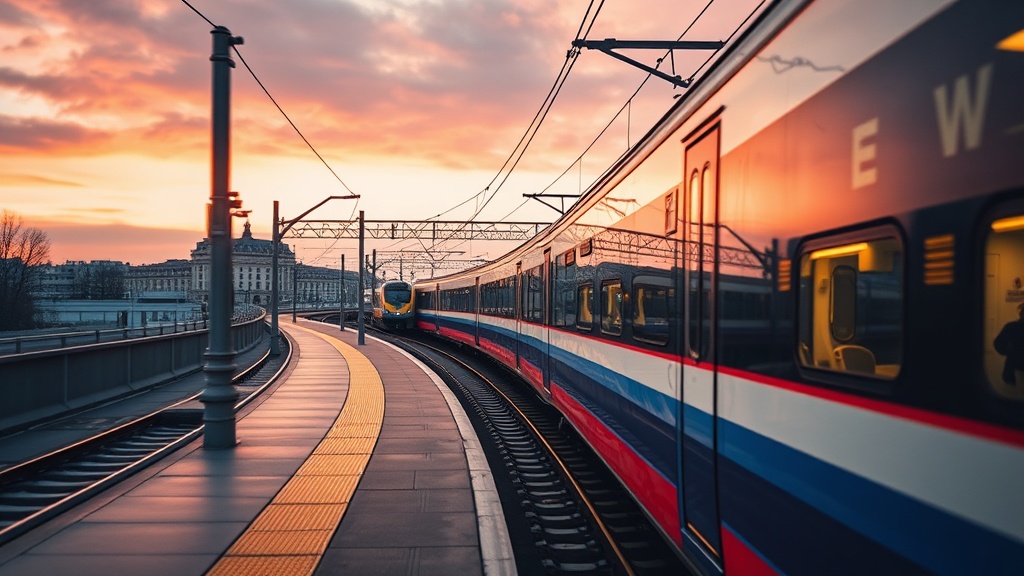
Navigating the High-Speed Rail Network of Central Europe

Have you ever stood on a train platform in Prague or Vienna and wondered why the ticket kiosks look like they were designed in the nineties? Moving between major European hubs via high-speed rail is one of the most efficient ways to see the continent, but the sheer number of different operators and booking platforms can be overwhelming. This guide explains how to book tickets, which train companies actually run the fastest lines, and how to avoid common mistakes that lead to missed connections or extra fees.
What are the best high-speed train operators in Central Europe?
The most reliable high-speed connections in Central Europe are operated by a few major national carriers, primarily ÖBB (Austrian Federal Railways), České dráhy (Czech Railways), and Deutsche Bahn (German Railways).
If you're traveling between Vienna and Budapest, you'll likely be on an ÖBB Railjet. These are high-quality, modern trains with plenty of space and reliable Wi-Fi. If you're moving through Germany or heading toward the Czech border, you'll encounter Deutsche Bahn (DB) high-speed ICE trains. They are fast—sometimes too fast if you're running late for a connection—but they are incredibly consistent.
For those moving between smaller hubs in the Czech Republic, the RegioJet service offers a great alternative to state-run lines. It's often cheaper and includes amenities like free coffee or even small screens for entertainment. It's a different experience than the standard state-run trains, but it's a solid choice for budget-conscious travelers.
Here's a quick breakdown of what to expect from the main players:
| Operator | Primary Region | Best Feature | Vibe |
|---|---|---|---|
| ÖBB (Austrian Railways) | Austria, Hungary, Czechia | Reliability and comfort | Premium & Professional |
| Deutsche Bahn (DB) | Germany, Western neighbors | Extensive network | Efficient & Fast |
| České dráhy (ČD) | Czech Republic, Poland | Affordability | Practical & Budget-friendly |
| RegioJet | Central Europe, Slovakia | Customer service/Amenities | Friendly & Modern |
Don't assume that just because a train is "fast" it will always be on time. While these networks are generally excellent, occasional delays happen (especially during winter weather in the Alps). Always check the live status of your train on the official ÖBB website or the DB app before you head to the station.
How much do high-speed train tickets cost?
Ticket prices vary wildly depending on how far in advance you book, but you can generally find high-speed fares ranging from €19 to over €100 per person.
The golden rule of European rail is to book early. If you buy a ticket at the station ten minutes before departure, you'll pay a massive premium. If you book three months in advance, you can snag "Sparschiene" or "Super Sparpreis" deals—these are heavily discounted tickets that are non-refundable. That said, if you want the flexibility to change your plans, you'll have to pay more for a "flexible" fare.
A few things to keep in mind:
- Seat Reservations: In many countries, a ticket doesn't automatically include a seat. You might have a valid ticket but be forced to stand in the corridor if you don't purchase a seat reservation.
- The "First Class" Myth: While first class is lovely, it's often only 20-30% more expensive than second class on many Central European routes. If you're on a budget, stick to second class and use the savings for a better dinner.
- Regional vs. High-Speed: A "Regional" ticket is much cheaper but will take twice as long. Make sure you know which one you're buying.
It's worth noting that booking directly through the official operator's app is almost always cheaper than using third-party aggregator sites. These sites often add a convenience fee that isn't strictly necessary. If you're looking for more general advice on navigating transit systems, you might find my post on finding reliable local transport helpful, though the technology in Central Europe is a bit more advanced than what you'll find in Southeast Asia.
How do I book the right seats for a long journey?
To ensure a comfortable ride, you should select a seat based on your personal preferences for space, noise, and movement.
When you're booking online, most systems will show you a digital map of the train car. You can usually choose between a "Table Seat" (where you face a fixed table, great for working) or an "Ambulant Seat" (where you face each other, better for conversation). If you're traveling with a partner, try to book a table seat so you aren't stuck sitting back-to-back with a stranger.
Here is my personal checklist for long-distance rail comfort:
- Check the power situation: Most modern high-speed trains (like the ICE or Railjet) have power outlets, but older regional trains might not.
- Look for the luggage area: If you have a large suitcase, look for a seat near the end of the car where the luggage racks are located.
- Noise control: If you're a light sleeper, try to avoid seats right next to the heavy vestibule doors where people constantly enter and exit.
- The "Quiet Zone": Many European trains have designated "Quiet Zones" (Ruhebereich). These are strictly enforced, and it's a lifesaver if you want to nap without hearing someone eating a bag of chips loudly.
I've found that the best way to handle these bookings is to use the official app of the country you're starting in. If you're starting in Prague, use the České dráhy website. If you're starting in Vienna, use the ÖBB app. The apps are much more reliable than trying to use English-language third-party sites that might not update in real-time.
Sometimes, the most memorable parts of a trip aren't the destinations themselves, but the rhythm of the travel. It's a slower way to see the world than flying, and it allows you to actually see the geography change outside your window. I've often felt that the best travel moments happen when you aren't rushing to a landmark, but rather enjoying the movement of the train through the countryside.
One thing to watch out for: the "platform change" announcement. In major stations like Berlin Hauptbahnhof or Vienna Hauptbahnhof, platforms can change at the very last minute. Always keep an eye on the large overhead digital displays. Even if your ticket says "Platform 4," the actual platform might be 12. It's a common way to miss a connection if you're too busy looking at your phone.
If you're traveling with a lot of gear, don't forget to check the luggage policy. Most high-speed trains are quite generous, but if you're carrying a massive hiking pack or a bulky item, you might find the overhead racks a bit tight. I've learned the hard way that a compact bag makes the transition between platforms much smoother.
The beauty of the Central European rail network is how it connects diverse cultures through a single, interconnected system. You can wake up in a medieval Czech town and be sipping coffee in a grand Viennese cafe by lunchtime. It's a seamless way to experience the transition from one culture to another without the stress of an airport terminal.