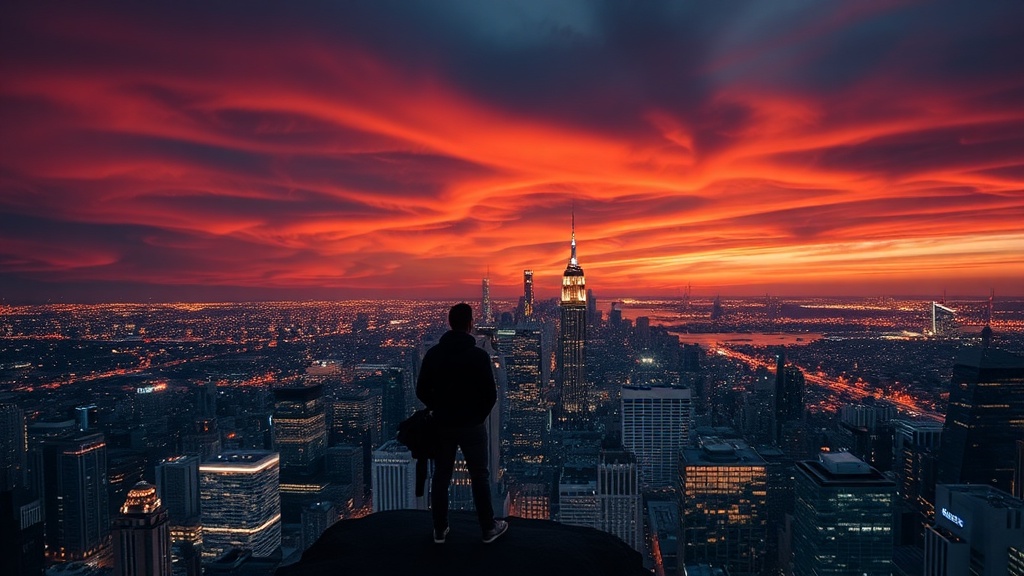
Why You Should Stop Looking for the Best View from the Top

Most travelers believe that the most profound way to understand a city is to climb its highest tower, stand on a rooftop bar, or hike to a designated lookout point. This perspective—that the best view requires elevation—is a common misconception. While looking down on a skyline offers a sense of scale, it often strips away the texture and intimacy that actually define a place. To truly grasp the character of a destination, you don't need to look down; you need to look around at eye-level.
This post explores why the most meaningful urban observations happen at street level rather than from a balcony. We'll look at how the rhythm of a city is found in its sidewalk culture, its street-level architecture, and the way people interact in public squares. Understanding these nuances is what separates a spectator from a participant in a new culture.
Is street-level observation better than a high-altitude view?
When you are high above the ground, you see a map, not a world. You see the geometry of streets and the patterns of traffic, but you lose the human element. From a rooftop, the sounds of a city become a muffled hum—a distant, indistinct background noise. At street level, however, the city is loud, chaotic, and incredibly vivid. You hear the specific clatter of a coffee cup against a saucer, the rhythmic tapping of a street performer's drum, and the various languages being spoken in a crowded market.
The view from a high point is static. It doesn't change unless the weather does. A street-level view is dynamic. It shifts with every passing minute. A corner that was quiet at 10:00 AM might be a bustling hub of activity by 5:00 PM. This constant movement provides a sense of the city's pulse that a static viewpoint simply cannot capture. If you want to understand the energy of a place like Tokyo or Mexico City, you shouldn't look at the skyline; you should look at the way people move through the narrow alleys and intersections.
How can I find the real soul of a city?
People often search for the "soul" of a city in its museums or monuments, but those are often curated versions of history. The real soul is found in the unscripted moments. It is in the way a vendor in a local market negotiates a price, or how a group of teenagers gathers on a specific set of stairs every evening. These are the living parts of a culture that aren't on a postcard.
To find this, you have to embrace the friction of the city. Don't avoid the crowded subway or the busy sidewalk. Instead, use them as your classroom. Observe the small details: the specific way a shopkeeper sweeps their doorstep, the local fashion trends that haven't hit the global stage yet, or the way light hits a particular brick wall at sunset. These micro-details are the building blocks of a city's identity. For a deeper look at how urban environments shape human behavior, the ArchDaily website offers incredible insights into how physical spaces influence our daily lives.
"The city is not just a place of buildings; it is a collection of stories happening simultaneously at every corner."
Instead of checking off a list of famous landmarks, try to find a single street and stay there for an hour. Watch the way the morning light changes, the way the people change, and the way the energy of the space evolves. This is where the real discovery happens.
What are the best ways to experience local culture without being a tourist?
The easiest way to avoid the "tourist bubble" is to change your physical perspective. Tourists tend to gravitate toward high-altitude viewpoints and centralized landmarks because they offer a sense of control and a "perfect" photo opportunity. To avoid this, seek out low-altitude, high-density areas. This might mean sitting in a small, local cafe rather than a large, branded one, or wandering through a residential neighborhood rather than a shopping district.
Practical ways to engage include:
- Eat at the counter: Instead of sitting at a table, sit at a bar or a counter. It puts you in direct proximity to the staff and other locals.
- Follow the scent: Sometimes the best cultural experiences are found by following a specific smell—like a bakery or a spice stall—rather than a signpost.
- Use local transport: Skip the ride-share apps for a day and take the bus or the tram. It is much harder to feel like a detached observer when you are part of the crowd.
For those interested in the sociology of urban spaces, the NYT Travel section often provides thoughtful essays on how we interact with the places we visit. By shifting your focus from the "grand view" to the "small detail," you gain a much more authentic connection to your surroundings.
Ultimately, the goal of travel isn't just to see a place, but to feel its texture. A view from a mountain top or a skyscraper is a beautiful thing, but it's a view of a space, not a culture. The culture is in the grit, the noise, and the small, unpolished moments that happen right at your feet.