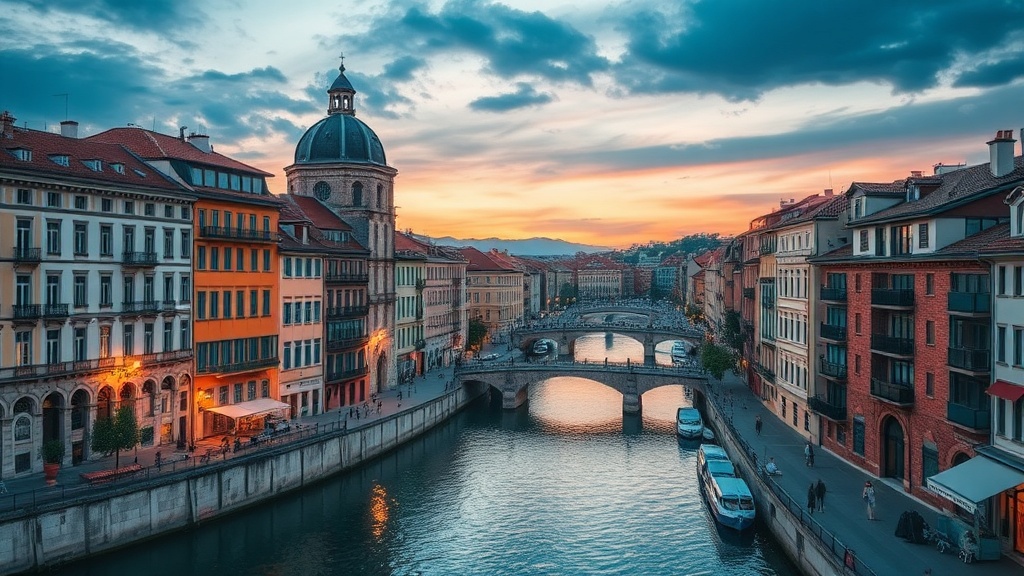
The Financial Logic of Choosing Secondary European Cities for Long-Term Stays

Nearly 45% of independent remote workers are now choosing secondary cities over global capitals to avoid the 300% markup on short-term rentals in spots like London or Paris. This isn't just a trend born of necessity; it's a calculated move to find better value, deeper community ties, and a lifestyle that doesn't feel like a permanent, exhausting vacation. This post covers the actual logistics of trading famous capitals for overlooked hubs, why the math often favors the "second-best" option, and how to set up a life in these places without losing your mind to local bureaucracy. It matters because the "digital nomad" dream is currently hitting a wall of soaring costs and local resentment in major hubs, making these alternatives the only way to sustain this lifestyle long-term.
Why are secondary cities becoming the primary choice for remote workers?
The glamor of living in the center of Lisbon or Barcelona is fading fast for anyone who actually has to pay a monthly bill. When you're on a week-long trip, a €150 nightly rate for an Airbnb is just part of the budget. When you're staying for three months, that same math becomes a nightmare. We're seeing a massive shift because secondary cities—think Porto instead of Lisbon, or Valencia instead of Barcelona—offer the same high-speed internet and cultural depth without the "tourist tax" applied to every cup of coffee. Beyond the money, there's the issue of overcrowding. Walking through the Alfama in Lisbon in July feels like being a background extra in a crowded theme park. In a secondary city, you're more likely to be a neighbor than a nuisance.
Local governments in these smaller hubs are also actively courting remote workers. They've seen the brain drain to larger capitals and want to reverse it. While major cities are often passing laws to restrict short-term rentals, secondary cities are often the ones opening new coworking spaces and supporting community events. It's a different energy entirely—one where you're welcomed rather than just tolerated. You'll find that the infrastructure is often just as good (and sometimes better, because it's not being pushed to its breaking point by ten million tourists a year).
What makes a city "livable" when you aren't just visiting?
Livable isn't just a buzzword; it's a checklist of things that stop being charming after the third week. High on that list is reliable public transit. You don't want to spend your life in an Uber because the metro doesn't reach your neighborhood. You also need a grocery store that isn't a "mini-mart" with inflated prices for foreigners. True livability comes down to the "fifteen-minute city" concept—can you get your coffee, your gym session, and your groceries done within a short walk of your front door? In places like Krakow or Valencia, the answer is almost always yes.
"The difference between a tourist destination and a home is how many people recognize you at the bakery after two weeks." — This is the metric we should be using.
Internet speed is another non-negotiable factor. While most of Europe has caught up, you'll still find "dead zones" in historic centers of major cities where thick stone walls and outdated wiring kill your Zoom calls. Secondary cities often have newer developments or better-funded municipal Wi-Fi initiatives. You can check specific speeds for almost any city on