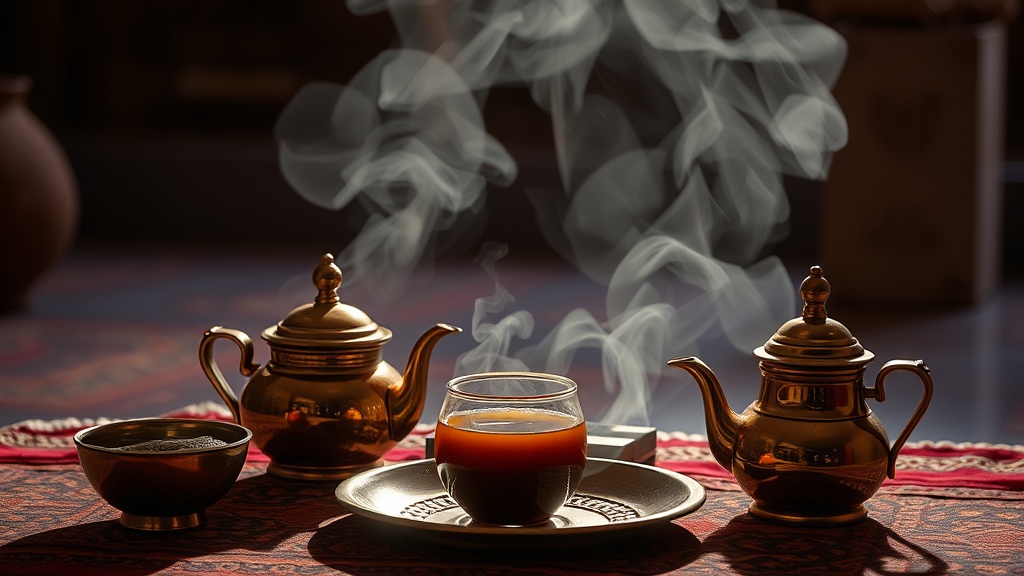
Savoring the Slow Rhythm of Traditional Moroccan Tea Ceremonies

In some parts of Morocco, a single tea service can last over an hour, involving multiple pours and specific social protocols that dictate the pace of the entire afternoon. This guide breaks down the ritual of Moroccan mint tea—often called "Moroccan Whiskey"—to help you understand the etiquette, the ingredients, and the cultural significance behind the glass. You'll learn how to spot an authentic ceremony, what to look for in a quality tea set, and how to behave when a local host offers you a glass.
What is the ritual of Moroccan mint tea?
The Moroccan tea ritual is a multi-step process involving the washing of tea leaves, the infusion of fresh mint, and a high-altitude pour to create foam. It isn't just about thirst quenching; it's a symbol of hospitality and a way to signal that there is no rush in the current conversation. The host often performs the ceremony with specific movements—like lifting the teapot high above the glass—to aerate the tea and create a layer of bubbles on the surface.
While many people think it's just a quick drink, the process is actually quite deliberate. You might see a host use a traditional Berrad (a Moroccan teapot) and small, colorful glasses often made by local artisans. The tea is usually served in three rounds, each with a slightly different flavor profile. The first round is often described as bitter, the second is mellow, and the third is sweet.
It's a slow process. If you're in a rush, you'll likely find yourself out of sync with the local rhythm. This is a social glue that keeps families and neighbors connected. It's a moment to breathe.
What are the essential ingredients for authentic tea?
Authentic Moroccan tea requires high-quality gunpowder green tea, fresh spearmint, and a significant amount of sugar. You won't find the subtle, delicate notes of a Japanese green tea here; this is bold, sweet, and incredibly refreshing. The combination of these three elements creates a drink that is both a stimulant and a social ritual.
Here is what you should look for if you want to taste the real thing:
- Gunpowder Green Tea: This is a specific type of Chinese green tea where the leaves are rolled into small pellets. It holds up well to the intense heat and the heavy infusion of mint.
- Fresh Spearmint: Not the dried stuff you find in a grocery store aisle. You want large, vibrant, green leaves of Mentha spicata.
- Sugar: Traditionally, large cones of sugar (known as sucre en pain) are used, though granulated sugar is common now. It's quite sweet—don't be surprised by the sugar content.
If you're curious about the history of these ingredients, the history of mint tea shows how much global trade influenced these local traditions. The tea itself was introduced to Morocco in the 19th century, but it has since become the undisputed king of the Moroccan beverage scene.
I've noticed that many travelers try to substitute ingredients when they can't find fresh mint. Don't do that. It changes the entire profile of the drink. It's not the same experience.
How do I follow proper tea etiquette in Morocco?
To follow proper etiquette, you should always accept the tea offered to you, use your right hand to hold the glass, and wait for the host to initiate the pouring. In Moroccan culture, refusing tea can sometimes be seen as a slight to the host's hospitality. Even if you aren't a big sugar eater, taking at least one glass shows respect for the person welcoming you into their space.
The way the tea is poured is also a sign of respect. The height of the pour is a point of pride. A high pour creates more bubbles (the "head" of the tea), which is a sign of a well-prepared drink. If the tea is served without any foam, it might be considered poorly made or "flat."
"The first glass is as bitter as life, the second as strong as love, and the third as sweet as death."
That's a common proverb used to describe the three stages of the tea service. It’s a bit dramatic, but it captures the intensity of the flavors.
When you're sitting in a cafe or a home, pay attention to the hands. Using your left hand for eating or drinking is generally avoided in many traditional settings—a rule that applies across much of North Africa and the Middle East. It’s a small detail, but it shows you're an observant guest.
If you find yourself navigating more than just tea—perhaps exploring the local food scenes in a new city—you might find my tips on navigating night markets with local street food etiquette helpful for your broader travels. The same rules of respect and observation apply everywhere.
Tea Varieties and Comparisons
Not all tea served in Morocco is created equal. While mint tea is the standard, you'll encounter variations depending on the region and the occasion. I've put together a quick comparison to help you understand what you're looking at when you see a menu or a tray.
| Tea Type | Primary Flavor | Best Served With... | Occasion |
|---|---|---|---|
| Classic Mint Tea | Sweet, heavy mint, bright | Traditional pastries/Kaab el Ghazal | Daily social visits |
| Absinthe/Wormwood Tea | Plain bread or light snacks | Often served in rural areas or for digestion | |
| Spiced Tea (Sahrawi style) | Warm, spicy, complex | Dates or dried fruits |
The Sahrawi style of tea is particularly interesting. It's much more intense and involves a lot of salt and spices, often served in the desert regions. It's a different beast entirely from the mint tea you'll find in a Marrakech cafe. It's a testament to how much the geography of a country dictates its culinary culture.
The catch? Don't expect a "light" version. If you're looking for a low-sugar experience, you might be disappointed. The sweetness is part of the identity of the drink. It's a heavy, caloric boost that provides energy for a long afternoon of walking or socializing.
If you're traveling through more rugged terrain and need to pack light, you might want to check out my guide on packing a minimalist kit. While you won't be carrying a tea set in a backpack, the principle of knowing what's essential for your environment is a great way to approach travel.
When you're in Morocco, the tea is more than a drink. It's a pause button. It's a way to say, "I am here, and I am present." Whether you're sitting in a bustling riad in Fes or a quiet corner of a cafe in Casablanca, take the time to watch the pour. The bubbles tell a story of patience and tradition.