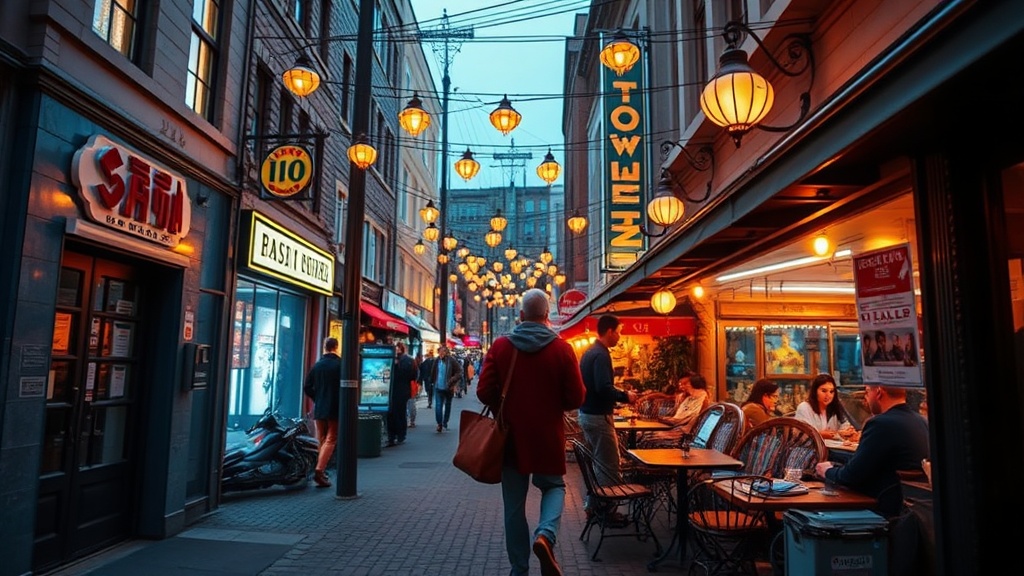
How to Discover Hidden Local Gems in Any City You Visit

How Do You Find Non-Touristy Things to Do in a New City?
This guide covers practical, proven methods for uncovering authentic local experiences — the neighborhood cafés, underground music venues, family-run shops, and quiet viewpoints that don't appear in guidebooks. You'll learn where to look, who to ask, and which digital tools actually work (spoiler: not all of them). Whether planning a weekend getaway or a month-long stay, these strategies will change how you explore.
Where Do Locals Actually Go — and How Can You Find Out?
Locals gravitate toward places that solve real problems: the coffee shop with reliable Wi-Fi near the courthouse, the bakery that opens at 6 AM for construction workers, the bar where bartenders drink after their shifts. The trick isn't finding these spots — it's knowing where to look.
Start with time-of-day observations. Morning crowds at a café usually signal quality (locals won't tolerate bad coffee before work). Lunch spots packed with people in work clothes beat tourist restaurants every time. That said, don't dismiss places just because they have some tourists — the real test is whether you'd see the same faces there on a Tuesday morning versus Saturday afternoon.
Here's the thing: locals love sharing recommendations when asked correctly. The question "Where should I eat?" gets tourist traps. The question "Where do you grab breakfast when you're running late?" gets the good stuff. Specificity matters. Ask baristas where they eat after work. Ask hotel housekeeping staff, not the concierge. Ask the person walking their dog at 7 AM — they know every quiet corner of their neighborhood.
Social platforms can help, but use them strategically. Reddit's city-specific subreddits (r/travel and local subreddits) often have wiki pages compiled by residents. The search function on Instagram — using neighborhood names rather than city hashtags — surfaces recent posts from people who actually live there. TikTok's location tags show unfiltered, real-time glimpses of places guidebooks haven't discovered yet.
What Apps and Tools Actually Work for Finding Hidden Gems?
Several digital tools consistently outperform generic travel apps when hunting for authentic experiences. The key is matching the right tool to the right situation.
| Tool | Best For | Limitations |
|---|---|---|
| Atlas Obscura | Unusual museums, historic oddities, architectural wonders | Can be outdated; verify hours before visiting |
| Spotted by Locals | Curated recommendations from resident writers | Limited cities; monthly subscription for full access |
| Google Maps Reviews | Reading between the lines of local complaints | Requires filtering through tourist noise |
| Eventbrite/Meetup | Local gatherings, craft workshops, neighborhood walks | Events change frequently; plan close to travel dates |
| Podcasts | Deep dives into neighborhood history and culture | Time investment required; not instant gratification |
The catch? No single app does everything. Atlas Obscura excels at quirky attractions — the world's smallest museum, a bar built in a former public restroom, a staircase that plays musical notes when walked upon. But it won't tell you where to find the best Tuesday night pasta special.
Spotted by Locals offers curated recommendations from writers who actually live in each city. The app costs around $4.99 monthly but provides offline access — invaluable when wandering neighborhoods with spotty data. Writers update their spots quarterly, so information stays relatively fresh.
Google Maps becomes powerful when you read strategically. Ignore five-star reviews written the week of someone's vacation. Instead, look for reviews mentioning "been coming here for years" or complaining about changes — these reveal longtime local favorites. Check the photos locals post: blurry shots of handwritten menus, packed parking lots at odd hours, kids doing homework in the corner.
How Can You Explore Neighborhoods Like a Local?
Walking aimlessly works — but structured wandering works better. The "third place" method (coined by sociologist Ray Oldenburg) focuses on gathering spots that aren't home or work: libraries, community centers, laundromats, barbershops. These places host real conversations.
Public transportation offers another window. Take the bus or metro to the end of the line. Walk back toward the center through residential streets. You'll see how people actually live — the community gardens, the local markets, the street art that hasn't been tagged for Instagram yet. Worth noting: grocery stores reveal everything about a neighborhood. The independent butcher on a residential street serves different customers than the downtown gourmet market.
Time your exploration deliberately. Early mornings show a city's working rhythm: delivery trucks, parents rushing kids to school, retirees claiming their park benches. Late afternoons reveal transition moments — the after-school crowd, the shift-change at factories, the pre-dinner rush at takeout counters. These rhythms don't appear in guidebooks because they aren't attractions; they're life.
Markets matter enormously. Not tourist markets selling identical souvenirs — neighborhood markets where people shop for dinner. In Barcelona, skip La Boqueria (beautiful but overrun) and find Mercat de Sant Antoni instead. In Tokyo, bypass Tsukiji's outer market crowds for Yanaka Ginza's local shopping street. The quality stays high; the prices drop; the experience becomes real.
Reading the Street: What to Notice
Certain visual cues separate local favorites from tourist traps:
- Language on menus: Multiple languages often signal tourist orientation. One local language with handwritten additions suggests regular customers who don't need translations.
- Opening hours: Places open 7 AM to 3 PM usually serve workers, not tourists. Sunday closures often indicate family-owned businesses with real weekends.
- Cash-only policies: An increasing rarity, but still common at established local spots that haven't "upgraded" their payment systems — often because they don't need to.
- Decoration: Photos of regular customers, local sports team memorabilia, or community event flyers indicate genuine neighborhood connection.
- Sound: Local languages dominating the room. Tourist restaurants sound like airports; local spots sound like dinner at someone's home.
How Do You Build Real Connections That Lead to Recommendations?
Transactions become relationships through repetition. Visit the same coffee shop three mornings in a row. Order the same thing. Make eye contact. Smile. By day three, you're no longer a random tourist — you're "the person who likes the oat milk cortado."
Small purchases create goodwill. Buy a newspaper from the corner shop. Get a single pastry from the bakery. These low-stakes interactions build familiarity without demanding conversation. The person behind the counter starts recognizing you. Recognition becomes acknowledgment. Acknowledgment becomes "Have you tried the place around the corner?"
Shared activities accelerate connection. Take a cooking class through Airbnb Experiences — not the ones in professional kitchens, but the ones in someone's actual home. Join a walking tour focused on specific themes (street art, architecture, food history) rather than general sightseeing. The guides at specialized tours are usually locals with genuine passion, not script-reciting students.
Language attempts matter more than proficiency. Learning "hello," "please," "thank you," and "delicious" in the local language opens doors. Effort signals respect. Respect generates warmth. Even terrible pronunciation attempts — especially terrible attempts — often spark friendly conversations about where you're from and what brought you here.
The Follow-Up Strategy
When someone gives a recommendation, treat it like gold. Go that day if possible. Return and report: "I went to that place you mentioned — incredible." This closes the loop and often triggers additional suggestions. People love being right about their city. Give them that satisfaction.
What Mistakes Do Travelers Make When Seeking Authentic Experiences?
Chasing "authenticity" too aggressively creates its own artificiality. The desperate hunt for undiscovered gems often leads to disappointment — or worse, to places that were local favorites until Instagram found them. Here's the thing: some tourist attractions are popular because they're genuinely extraordinary. The Sagrada Familia deserves its crowds. Don't skip it just because everyone goes there.
Another common error: rejecting anything developed after 1950. A city isn't a museum. New restaurants, new galleries, new music venues matter too. The "real" city includes its present tense, not just its preserved past. That modern tapas bar with Edison bulbs and natural wine? Locals built it. Locals run it. Locals eat there.
Over-planning kills discovery. Leave gaps in the itinerary. Schedule nothing for entire afternoons. The best discoveries happen during unstructured time — when you follow the sound of live music down an alley, or notice a crowd gathering outside an unmarked door, or get caught in sudden rain and duck into the nearest café.
Respect boundaries. Residential neighborhoods aren't zoos. People live in those pretty streets you're photographing. Don't peer into windows. Don't photograph strangers without permission. Don't treat someone's daily commute as your "authentic experience." The goal isn't to consume local life — it's to participate briefly, respectfully, and then move on.
How Do You Know When You've Found the Real Thing?
You'll feel it before you can name it. The server remembers your order from yesterday. Someone asks if you're new to the neighborhood. A conversation starts without you initiating it. These moments signal transition — from visitor to temporary local.
The real gems rarely look impressive at first. They're the understated storefronts, the places with no website, the bars with handwritten signs. They don't need to look good — they're too busy being good. Trust the lines of people who clearly aren't following guidebooks. Trust the spots where phones stay in pockets because the conversation matters more than the documentation.
Every city keeps secrets. Some reveal themselves quickly; others require patience. The strategies in this guide won't guarantee discovery — nothing can — but they'll tilt the odds in your favor. Start with curiosity. Add patience. Mix with genuine respect for the people who call this place home. The gems will find you.
"The best travel moments happen when you stop performing tourism and start practicing presence." — Sarah Murphy
Steps
- 1
Connect with locals through community apps and social media
- 2
Explore residential neighborhoods away from main tourist districts
- 3
Visit markets, local events, and family-run establishments