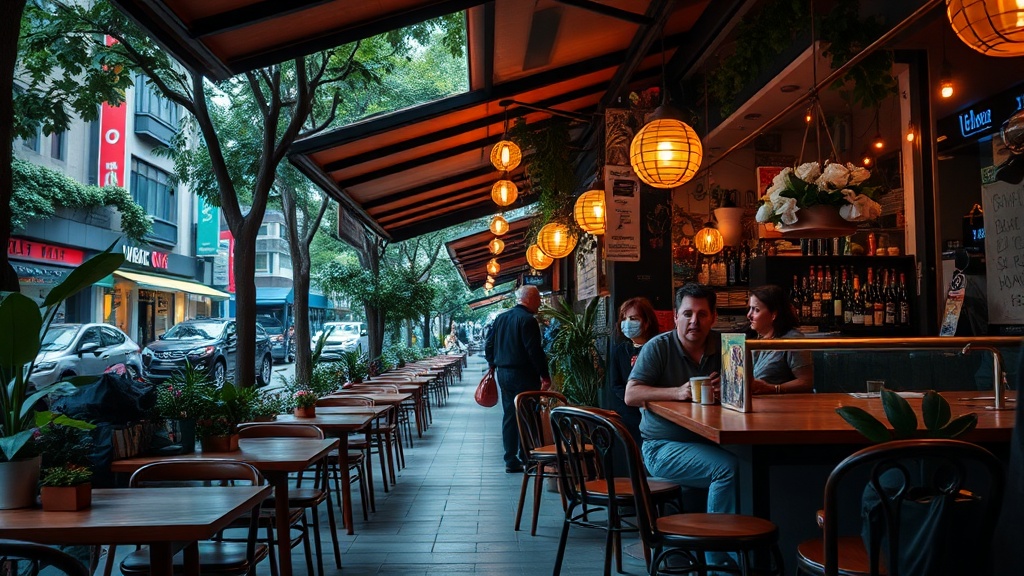
Finding Quiet Coffee Shops in Dense Urban Jungles

The sound of a heavy espresso machine steaming milk hits a sharp, rhythmic peak, only to be swallowed by the low hum of a subway line rumbling beneath the street. A single window seat in a crowded metropolis is a rare prize. This guide explains how to identify, find, and secure a quiet corner in a dense urban environment so you can actually get work done or enjoy a moment of peace.
Cities like New York, Tokyo, or London are built on noise. It's constant. Between the sirens, the construction, and the sheer volume of human movement, finding a pocket of stillness feels nearly impossible. You aren't just looking for a caffeine fix; you're looking for a sanctuary.
How Do You Find a Quiet Coffee Shop in a Busy City?
The best way to find a quiet spot is to look for "interior-facing" seating or shops located on secondary streets rather than main thoroughfares. Most people flock to the cafes on the corner of a major intersection. These are the loudest. Instead, turn your eyes toward the mid-block locations or shops that have a courtyard or an internal patio.
I've learned through years of traveling that the "main street" trap is real. If a cafe is right next to a subway entrance, don't bother. The vibration alone will ruin your concentration. I've sat in spots near the New York City Subway waiting for the screeching to stop, and it's a lost cause.
Look for these specific indicators of a quieter environment:
- The "Back Room" Phenomenon: Many high-end coffee shops have a small, secondary room that isn't visible from the street. This is often the quietest spot in the building.
- Acoustic Dampening: Look for shops with heavy rugs, velvet curtains, or plenty of bookshelves. These materials absorb sound. A cafe with floor-to-ceiling glass and concrete floors will be an echo chamber.
- Non-Peak Hours: A cafe that is a madhouse at 8:30 AM might be a desert at 11:00 AM. Timing is everything.
It helps to check digital footprints before you even leave your hotel or Airbnb. Use Google Maps to look at the "Popular Times" graph. If the graph shows a steep climb, walk two blocks in any direction. Usually, the density of shops decreases as you move away from the central business district, and so does the noise level.
What Should You Look for in a Cafe's Layout?
A cafe's physical layout dictates how much you'll actually hear. A single long bar with high stools is built for speed and social interaction—it's not a place for deep focus. If you want to read or write, you need to find a space with "soft" zones.
I once spent three hours trying to work in a cafe in Shinjuku. The aesthetic was beautiful—minimalist wood and clean lines—but the lack of any soft surfaces meant every clink of a spoon sounded like a gunshot. It was exhausting. I realized then that "minimalist" often translates to "loud" in the world of urban cafe culture.
When scouting a spot, observe the seating from the street through the window. If you see people wearing large over-ear headphones (like the Apple AirPods Max) and leaning into their laptops, you've found a productive zone. If you see mostly people standing up with paper cups, it's a transit-oriented shop. You'll be interrupted by the door-opening chime every thirty seconds.
| Cafe Type | Noise Level | Best Use Case |
|---|---|---|
| Main Street/Transit Hub | High | Quick caffeine hit, standing room |
| Residential Side-Street | Low to Medium | Reading a book, casual conversation |
| Hotel Lobby Cafe | Medium | Consistent Wi-Fi, reliable power |
| Interior/Courtyard Cafe | Very Low | Deep work, long-form writing |
The table above is a rough guide, but it's a good starting point. Don't rely solely on it, though. Every city has its own rhythm.
Is it Better to Work in a Cafe or a Library?
Libraries are objectively quieter, but cafes provide a specific kind of "ambient white noise" that can actually aid focus for some. This is often called the "coffee shop effect." The low-level chatter can drown out the jarring sounds of the city—like a car horn or a shouting pedestrian—without being distracting.
However, libraries have rules. You can't order a latte in a library, and you'll certainly feel awkward if you're staying for four hours on one cup of tea. A cafe, on the other hand, is a social contract. If you buy a pastry and a coffee, you've "rented" that space for a while.
That said, if you are in a city where the weather is unpredictable, a cafe is a safer bet. Libraries can be intimidating or strictly regulated. A cafe is a neutral ground. I often find that the best travel moments happen far from the famous landmarks, and that includes finding a quiet nook in a local cafe rather than sitting in a crowded, noisy tourist hub.
One thing to remember: check the power outlets. There is nothing more frustrating than finding a perfect, quiet corner only to realize there isn't a single plug in sight. If you're a digital nomad, your power bank or a portable charger is your best friend. Don't assume a "laptop-friendly" cafe actually has the infrastructure to support you.
If you find yourself in a situation where you need absolute silence, look for university libraries. Most public libraries allow visitors, though some may have restrictions on laptop use in certain zones. But for most of us, the goal isn't total silence—it's just a manageable level of calm.
The next time you're in a new city, don't just search for "best coffee near me." Search for "quiet cafe" or "workspace cafe." It's a different way of looking at the urban landscape. It's the difference between being a tourist and being a traveler who knows how to inhabit a space.